

Key Takeaways
- Scammers target aircraft buyers and sellers with prepaid parts schemes, fake wire instructions, and phantom identities that are hard to trace once money moves
- A clear title check means pulling FAA aircraft records directly and matching names, bills of sale, and lien releases rather than trusting a seller’s word
- An independent pre-purchase inspection by a certificated A&P mechanic, paired with a careful logbook review, catches problems a listing photo never will
- Wire transfers and escrow arrangements still need independent verification of the bank and the agent before any money or logbook changes hands
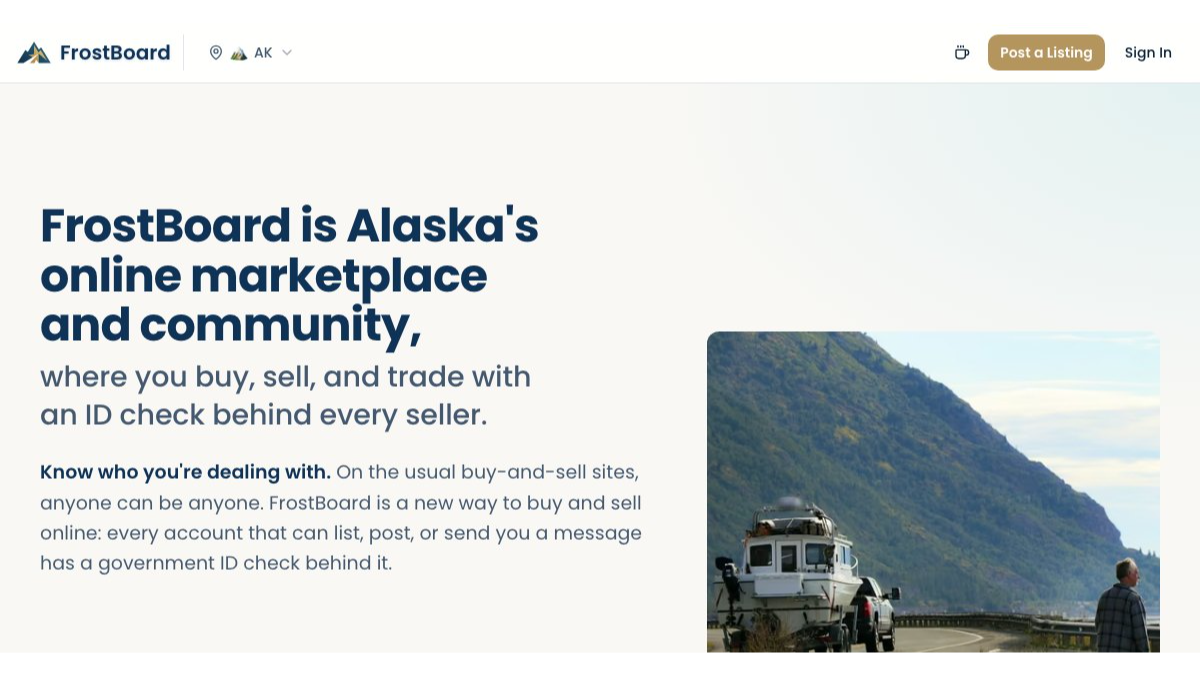
- Every account that can list, post, or message a seller on FrostBoard passes a government ID check first, which changes who a pilot is actually dealing with
A used airplane listing can look perfect right up until the money disappears. For Alaska pilots, where the next hangar or buyer might be three hundred miles and a mountain range away, a private aircraft deal often rests on nothing more than a phone number and a good feeling. That gap between strangers is exactly where scams take root, and it is worth understanding before a single dollar changes hands.
A Propeller Deal Heard at Palmer
At the 2026 Great Alaska Aviation Gathering in Palmer, a pilot told the story of a friend who lost thirteen thousand dollars buying a propeller. The voice on the other end of the deal was AI.
Good questions cannot confirm an identity that was never real. FrostBoard’s aircraft section was built around that failure point, with a government ID check behind every account that can list, post or send a message, so a buyer knows who is on the other side of a propeller, an engine or a logbook deal.
That single story shows why aircraft transactions deserve more caution than a used truck or a snowmachine. The dollar amounts are higher, the parts are harder to source elsewhere, and the pool of serious sellers is small enough that scammers can specifically target pilots who are eager to find a rare part or a good deal on a bush plane.
Why Private Aircraft Deals Attract Scammers
Private aircraft sales combine three things scammers look for: large sums of money, motivated buyers, and parts or planes that are genuinely scarce. Put those together and a scammer has a significant advantage, because a buyer who has been searching for months for the right propeller or the right Super Cub is more likely to move fast and skip a step.
The Prepaid Propeller Scam
The pattern behind the Palmer story is common enough to recognize: a buyer finds a rare or in-demand part, a convincing seller asks for payment up front to hold or ship it, and the part never arrives. Once the money is wired or sent through a payment app, recovering it is difficult, since there was no real seller behind the listing to begin with. The warning signs are often subtle. A seller who avoids phone calls, insists on one payment method, or cannot produce a serial number photo on request is worth treating with extra skepticism, no matter how good the price looks.
Why Pilots Are a Target
Parts like propellers, engines, floats, and avionics are expensive and genuinely hard to find in Alaska, which means pilots often search wider and wait longer than buyers in other categories. That patience and urgency make an appealing listing easy to fall for. A scammer does not need to fool many people to profit, since even one successful prepaid scam on an engine or a propeller worth thousands of dollars covers the cost of dozens of failed attempts elsewhere.
Verify the Person Before the Plane
Before evaluating logbooks or arranging an inspection, confirm that the person on the other end of the conversation is who they claim to be. This step gets skipped more often than it should, mostly because it feels like common sense rather than a formal part of the buying process.
ID Checks Behind Every Listing and Message
An identity check does not guarantee a perfect transaction, but it takes away the easiest version of the scam: a seller with no real name attached. Both people in a Marketplace conversation are verified before the conversation can open, including the buyer, and every account that can list, post or send a message has a government ID check behind it, along with a confirmed email address and phone number. In a propeller deal like the one described in Palmer, the account on the other end would have had a government ID check behind it before the first message.
Reviews That Follow Both Buyer and Seller
Identity is only half of accountability. Reviews that follow a member across the platform, in both directions, give a seller a track record and give a buyer the same exposure. A seller with several completed deals and solid reviews behind their name carries a different kind of credibility than a brand-new account with nothing to show. Treat a thin or missing review history as a reason to slow down and ask more questions, not necessarily a reason to walk away, since newer sellers exist too. The pattern matters more than any single review.
Confirm Ownership and Liens
A verified seller is not the same as a clear title. Ownership and lien checks protect a buyer from a separate risk: paying full price for a plane that still has money owed against it, or that was never fully owned by the person selling it.
Checking FAA Records Yourself
FAA aircraft records are public, and the FAA Aircraft Registration Branch does not perform title searches on a buyer’s behalf, which means the responsibility to look falls on the pilot making the purchase. Reviewing those records directly, or hiring an attorney or an aircraft title search company to do it, reveals recorded liens and their priority. A clear-title review checks for unreleased mortgages, security agreements, tax liens, and similar claims, though state law also plays a role, and not every security interest has to be filed with the FAA. Because of that gap, FAA registration alone is not proof of ownership in a legal dispute, so pairing a records search with a review of the actual ownership documents matters just as much as the search itself.
Matching Names, Bills of Sale and Lien Releases
Confirm that the seller’s name and address match the registration information on file, and check that the registration is current before moving forward. The seller should provide an original signed bill of sale, and the name on that bill of sale needs to match the name that goes on the registration application. When a lien exists, coordinate payment so the lien holder gets paid and the release gets documented before treating ownership as clear. One practical safeguard: a buyer’s purchase funds can be made jointly payable to the registered owner and any lien holder, which reduces the risk of a seller pocketing the full amount while a lien still sits unpaid against the aircraft.
Read the Logbooks Before You Fly
Even a clean title does not say much about how well an aircraft has actually been maintained. The logbooks are where that story gets told, assuming they are complete and consistent.
What to Look for in Airframe and Engine Logs
A careful review of airframe and engine logs looks for unusual entries, major repairs or alterations, compliance with airworthiness directives, and the status of service bulletins. Serial numbers on the aircraft and its components should match what is written in the logs. Beyond the logs themselves, confirm that key documents are present and in order: the airworthiness certificate, engine and airframe logbooks, an equipment list, weight-and-balance data, placards, and the approved flight manual or owner’s handbook. Requesting these records before traveling to inspect the aircraft in person allows plenty of time to review logbook and history concerns early, rather than finding a gap after flying hours away to see the plane.
Hiring an Independent Mechanic
A logbook review goes only so far without a hands-on inspection. Having a qualified, independent mechanic look over the aircraft before completing a purchase is a standard step for good reason: an FAA-certificated A&P technician or an approved repair station can catch issues that paperwork alone will not reveal. A purchase agreement can spell out inspection and title contingencies, how a deposit is handled, and what needs to happen before closing. It also helps to list exactly which records the seller will deliver, rather than relying on a general promise to hand over all logbooks, since a specific list is easier to check against what actually arrives.
Protect Your Payment at Closing
Even after the title is clear and the inspection checks out, the final exchange of money and records is where a careful deal can still go wrong. Closing deserves the same discipline as every step before it.
Verifying Wire Instructions and Escrow Agents
Confirm wire instructions through a known, independently verified channel, and treat any last-minute email change to payment details as a potential sign of fraud. Many sellers prefer a bank wire to a cashier’s check, but a seller should still confirm the funds are legitimate, including by contacting a bank officer directly. When an escrow agent is involved, that agent’s contact details should be looked up and verified independently rather than trusted solely because the seller chose them. Logbooks should not be released until payment has cleared or a verified escrow agent is holding the funds.
Confirming Funds Before Records Change Hands
A seller should never accept a check for more than the agreed price, and should never send back money for an alleged overpayment, since that pattern is a known fraud tactic. Funds need to be verified with the bank before the aircraft or its records change hands. The closing sequence should confirm that funds have actually arrived and that title conditions are clear before anyone treats the transaction as finished. Rushing this last step undoes the careful work done earlier in the process, so patience here matters as much as patience during the inspection.
A Verified Deal Protects Both Sides
Buying or selling an airplane privately in Alaska does not have to mean gambling on a stranger’s word. Verifying identity, checking title and liens, reading the logbooks, arranging an independent inspection, and confirming payment before records change hands each close off a different way a deal can go wrong. Skipping even one step reopens the door that scammers rely on.
A little extra caution up front costs far less than thirteen thousand dollars after the fact. Pilots ready to list an aircraft, a set of floats, parts or hangar space with a verified identity behind every message can start at https://frostboard.com/browse/aircraft.
FrostBoard
P.O. Box 876318
Wasilla
Alaska
99687
United States