GUANGZHOU, GUANGDONG, CHINA, August 31, 2026 /EINPresswire.com/ — The capacity to gather high-quality human manipulation data is becoming an essential component of the robotics development stack as humanoid robots progress from laboratory demonstrations to real-world deployment.
One of the most challenging issues in embodied robotics is dexterous manipulation.
A robot might be able to move a traditional gripper from one place to another, plot a trajectory, or identify an object. However, a far deeper comprehension of human hand movement is needed for activities like rotating a small component, altering grip force, manipulating irregular items, or coordinating many fingers.
This poses a basic problem for robotics developers: how can human hand gestures be precisely recorded, transformed into commands that are compatible with robots, properly checked, and stored as structured data for subsequent model training?
This is the point at which data collection and dexterous teleoperation become crucial.
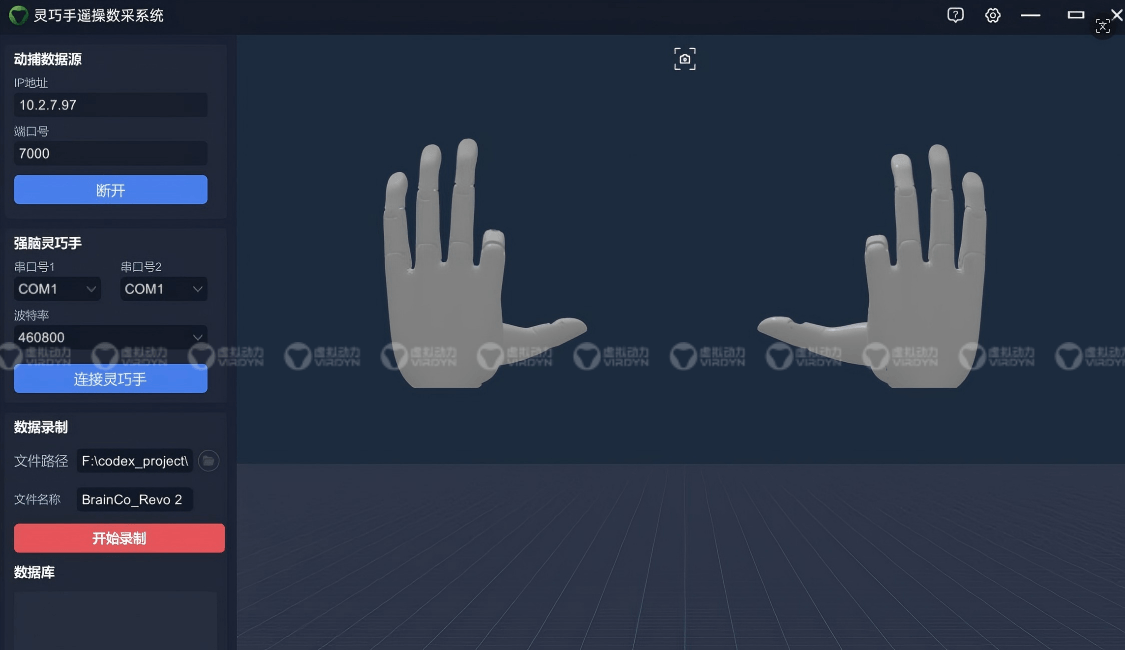
Motion capture, dexterous-hand teleoperation, simulation, and hardware control are all made possible by Virdyn mHand Studio. This article explains how robotics R&D teams may use Virdyn’s unified approach to convert human demos into useful robot learning data.
https://www.virdynm.com/virdyn-mhand-pro-a-smart-motion-capture-gloves-for-virtual-reality-product/
Robot Learning Data from Human Demonstration
This is how a streamlined pipeline appears:
Human demonstration → motion capture → robot-compatible representation → training dataset → learnt policy → robot operation
However, the example goes much beyond a basic hand position for deft handling.
It may include:
Movements of the finger joints
Finger placements relative to each other
orientation of the wrist
trajectory of the hand
Timing details
Coordination of several joints
Movement patterns associated with contact
Switch between various grip setups
Therefore, recording movement alone is not the challenge. Capturing it in a format that a robot-learning system can synchronize, interpret, transform, and reuse is a difficulty.
Additionally, Google DeepMind describes motion-capture data as a source for learning controllable motor actions and has investigated the use of human and animal motion data to teach robotic systems.
This makes the organization and quality of the demonstration data especially crucial for dexterous-hand R&D.
The Difficulty of Data Acquisition in Dexterous Robotics Hand
The human hand moves in a very complicated way.
Different finger trajectories can be used by two people to accomplish the same activity. Depending on the shape of the object, the demands of the task, the speed, or the surroundings, even the same person may employ different movements.
This flexibility poses a number of technological difficulties for a robot-learning system.
1. Human intent needs to be converted into machine-readable data
Humans do not consider the angles of individual robot joints.
An operator might just consider:
“Rotate the part and move my fingers.
However, a coordinated set of joint-level orders is required for a dexterous robotic hands.Therefore, the system has to convert human hand posture into a representation that the target robot can comprehend.
2. The robotic hand and the human hand are distinct embodiments
Rarely are a robotic dexterous hand and a human hand identical:
Combined counts
Joint boundaries
Dimensions of links
Levels of liberty
Organize systems
Mechanical limitations
Therefore, it is frequently insufficient to just replicate sensor values.To convert human hand motion into a suitable robot configuration, a retargeting layer is needed.
3. Timing is important
An interactive control problem is teleoperation.
The resulting dataset may become challenging to use if motion capture, retargeting, visualization, hardware commands, and data recording all operate on distinct timing bases.
Timestamps and synced data streams might be just as crucial for machine learning applications as the motion itself.
4. Hardware testing can be costly.
Practical concerns arise when an unconfirmed motion is sent straight to a robotic dexterous hand.
Even a small mapping error in software can lead to:
Unusual finger positions
Joint-limit infractions
Unexpected collisions
Interference from mechanics
Ineffective manipulation
Cycles of repeated debugging
Preventing these issues before to physical execution can help R&D teams save engineering resources and equipment time.
What Is Virdyn mHand Studio?
Motion capture, dexterous-hand teleoperation, simulation, hardware control, and motion-data collecting are all possible with Virdyn mHand Studio.
The Virdyn mHand Pro Motion Capture Gloves, which employ a multi-sensor inertial architecture and offer a variety of data formats and software-development interfaces, are compatible with the system. Our mHand Pro platform offers several SDK integration options and enables data outputs in raw data, quaternion, Euler, and BVH formats.
The motion capture gloves software system integrates motion capture, visualization, hardware control, and recording into a single workflow, eliminating the need for engineers to move between various apps.
One way to interpret the final architecture is as follows:
Motion Capture → Retargeting → 3D Simulation → Hardware Teleoperation → Data Recording → Verification
For robotics R&D teams working on humanoid manipulation, dexterous hands, embodied AI, and human-in-the-loop control, this closed-loop method is very pertinent.
Four Core Modules of the Mhand Studio Data Acquisition Workflow
1. Reception of Motion Capture Data
Receiving human hand movement from the Mhand Pro motion capture gloves is the initial step.
The mHand Pro glove is a wearable device with 16 sensors that records hand and finger movements. The Mhand Studio engine allows for the real-time transcription of hand motions into digital models.
The recorded motion is fed into the downstream retargeting and control pipeline for robotics applications.
2. Hardware Control in Real Time
The necessary orders can be sent to the actual robot when the captured movement has been analyzed and mapped to the target dexterous hand.
As a result, the system becomes a human-in-the-loop robotic control environment instead of a traditional motion-capture application.
While the robotic hand replicates the equivalent motion, an operator can demonstrate a movement with their own hand.
This gives robotics developers a useful method to assess robot behavior through human demonstrations for tasks like grasping, rotation, insertion, manipulation, or assembly.
3. Visualization of URDF Models
The ability to see the target robotic hand using its URDF model is a crucial tool for engineering procedures.
The linkages, joints, and physical relationships of a robot can be represented in an organized manner using the Unified Robot Description Format (URDF).
Before turning on the actual hardware, engineers can examine how the robot is supposed to move when the retargeted motion is shown in a three-dimensional setting.
This modifies the debugging procedure from:
“Send command → observe hardware → identify problem → modify → repeat”
to:
“Map motion → simulate → verify → execute.”
When dealing with costly or mechanically limited robotic systems, this distinction can be crucial.
4. Recording and Playing CSV Data
For simple inspection, replay, and analysis, the Mhand Studio stores important teleoperation data in organized CSV files, such as joint angles and timestamps. The motion capture solution aids robotics R&D teams in maintaining consistent, traceable datasets that can enable robot motion analysis, debugging, demonstration replay, and imitation learning workflows by clearly distinguishing retargeted motion data from hardware feedback data.
Virdyn mHand Studio: From Motion Capture to Embodied Intelligence
The significance of the Mhand studio motion capture gloves software system is therefore broader than simply controlling a robotic hand.
Its value lies in connecting several previously fragmented stages of the robotics development process:
Human expertise
motion capture
pose retargeting
3D simulation
safety verification
real-time teleoperation
structured data recording
robot learning and iteration
This establishes a development cycle that allows human expertise to be acquired, translated into motion that is compatible with robots, tested virtually, carried out physically, and documented for further research.
Such a workflow can reduce the gap between data and demonstration for robotics R&D teams.Teams can handle each confirmed demonstration as a potentially reusable data asset rather to treating every teleoperation experiment as a one-time hardware test.
FAQ
1.What is dexterous hand teleoperation?
Dexterous robot hand teleoperation is a control technique that converts the hand movements of a human operator into comparable robotic hand movements. Without having to manually program each joint trajectory, it allows researchers to show manipulative behaviors.
2.What is robotic motion retargeting?
The process of converting movement recorded from one embodiment—like a human hand—into a motion representation that is appropriate for another embodiment—like a robotic dexterous hand—is known as motion retargeting.
3.Why is simulation crucial prior to robot execution?
An intermediary step of verification is offered by simulation. Before delivering commands to actual hardware, engineers can examine the anticipated robot posture and see any possible mapping or joint-motion issues.
4.What information may be recorded using your mHand Studio Software System?
Virdyn’s system workflow can collect motion-related data, including joint angles and timestamps, CSV files can be used to separate hardware feedback data from retargeted data.
Next Steps: Create Robot Dexterous Hand Data from Human Motion
Before doing your next skillful manipulation task on real hardware, test it in simulation. Tell us about your robotic hand, application, and development objectives if you are creating a repeatable, dexterous hand teleoperation and data-gathering workflow. From motion capture and retargeting to simulation, teleoperation, and organized training data, contact the Virdyn team today; we can assist you in exploring mHand Studio and developing a workflow.
Virdyn
Virdyn
virdyn@outlook.com
Legal Disclaimer:
EIN Presswire provides this news content “as is” without warranty of any kind. We do not accept any responsibility or liability
for the accuracy, content, images, videos, licenses, completeness, legality, or reliability of the information contained in this
article. If you have any complaints or copyright issues related to this article, kindly contact the author above.

Media gallery